 Hearmony
Major vs Minor Chords: How to Hear the Difference
Major and minor chords differ by a single note: the middle one, called the third. C major is C E G; C minor is C E♭ G, with the E lowered by one half step. That small change is why major chords tend to sound bright and settled while minor chords sound darker. With a few minutes of focused listening a day, most people learn to tell them apart reliably.
What is the difference between major and minor chords?
A major chord stacks a major third (4 half steps) on the root, then a minor third (3 half steps) on top. A minor chord does the opposite: a minor third first, then a major third. Both have the same outer notes, the root and the fifth, so only the middle note moves.
| Root | Major chord | Minor chord | The note that changes |
|---|---|---|---|
| C | C E G | C E♭ G | E → E♭ |
| D | D F♯ A | D F A | F♯ → F |
| E | E G♯ B | E G B | G♯ → G |
| F | F A C | F A♭ C | A → A♭ |
| G | G B D | G B♭ D | B → B♭ |
| A | A C♯ E | A C E | C♯ → C |
Notice the spelling: F minor is F A♭ C, not F G♯ C. The third of a chord always uses the letter two steps above the root (F, then A), even when it needs a flat.
What notes are in a minor chord?
A minor chord has three notes: the root, the minor third above it, and the perfect fifth above the root. Count it in half steps: root, up 3, then up 4 more. From A that gives A, C, E; from D it gives D, F, A.
On a piano, the quickest way to turn any major chord minor is to lower its middle note by one key. On guitar, the same idea explains why an open E major chord becomes E minor when you lift one finger: the G♯ on the third string drops to an open G.
Why do minor chords sound sad?
Minor chords sound sad to most Western listeners partly because of their acoustics and partly because of what we've learned to expect. The major triad lines up with low notes of the harmonic series, the overtones present in a single musical note, so it sounds especially stable and blended. The minor triad fits that series less simply, which gives it a darker, less settled color.
Culture does the rest. Film scores, hymns and pop songs have paired minor keys with sad or serious scenes for centuries, so the association is reinforced every time you listen. That's why the mood link is strong but not absolute.
Is a minor chord always sad?
No. Tempo, rhythm and sound shape the mood as much as the chord does. "Hit the Road Jack" is in a minor key and sounds sassy, not sad; a lot of dance music sits in a minor key and feels energetic. A slow, quiet major chord can sound wistful.
This matters for ear training. If you listen for "happy or sad", you'll be fooled by context. Listen for the color of the middle note instead: bright and open (major) or shaded and close (minor).
How do you tell if a chord is major or minor by ear?
Focus on the third, the middle note, and compare it with a chord you already know. These steps work on piano, guitar or recordings:
- Hear it broken. Play or imagine the chord one note at a time: root, third, fifth. In a broken chord, the step from the first note to the second is either the "When the Saints" major third (C–E) or the "Greensleeves" minor third (A–C). Our interval songs chart covers both.
- Hum the middle note. Hum the lowest note, then slide up to the next chord tone you hear. A big, bright step means major; a smaller, darker one means minor.
- Compare side by side. Play C major then C minor, then the mystery chord. Which one does it match?
- Go back to block chords. Once broken chords feel easy, listen to all three notes at once and judge the overall color.
Start every session with five broken chords before you switch to block chords. Hearing the third on its own trains the ear far faster than guessing at a full chord.
Common mistakes
- Calling a diminished chord minor. A diminished chord (C E♭ G♭) also has a minor third, but its lowered fifth makes it tense and unstable rather than just dark. See what a diminished chord is.
- Listening to the top note. The top note of a chord is often the fifth, which is the same in major and minor. Listen to the inside of the chord.
- Getting thrown by inversions. E G C is still C major, just with E on the bottom. The color stays the same, but the shape changes; start with root-position chords.
- Sus chords. Csus4 (C F G) has no third at all, so it's neither major nor minor. If a chord sounds open and hanging, it may be suspended.
Listening drill: 10 chords, major or minor?
Ask a friend to play these chords on a piano or guitar in the order shown, one at a time, while you cover the answer column. Say "major" or "minor" before each reveal. Then repeat in a new order.
| # | Friend plays | Answer |
|---|---|---|
| 1 | G B D | G major |
| 2 | A C E | A minor |
| 3 | F A C | F major |
| 4 | D F A | D minor |
| 5 | E G♯ B | E major |
| 6 | C E♭ G | C minor |
| 7 | B♭ D F | B♭ major |
| 8 | E G B | E minor |
| 9 | D F♯ A | D major |
| 10 | G B♭ D | G minor |
Score 8 out of 10 on two different days and you're ready for the next chord types: diminished, augmented and sus chords, covered in types of chords and how to identify them. For the full order of skills, see ear training for beginners.
Practice major vs minor in Hearmony
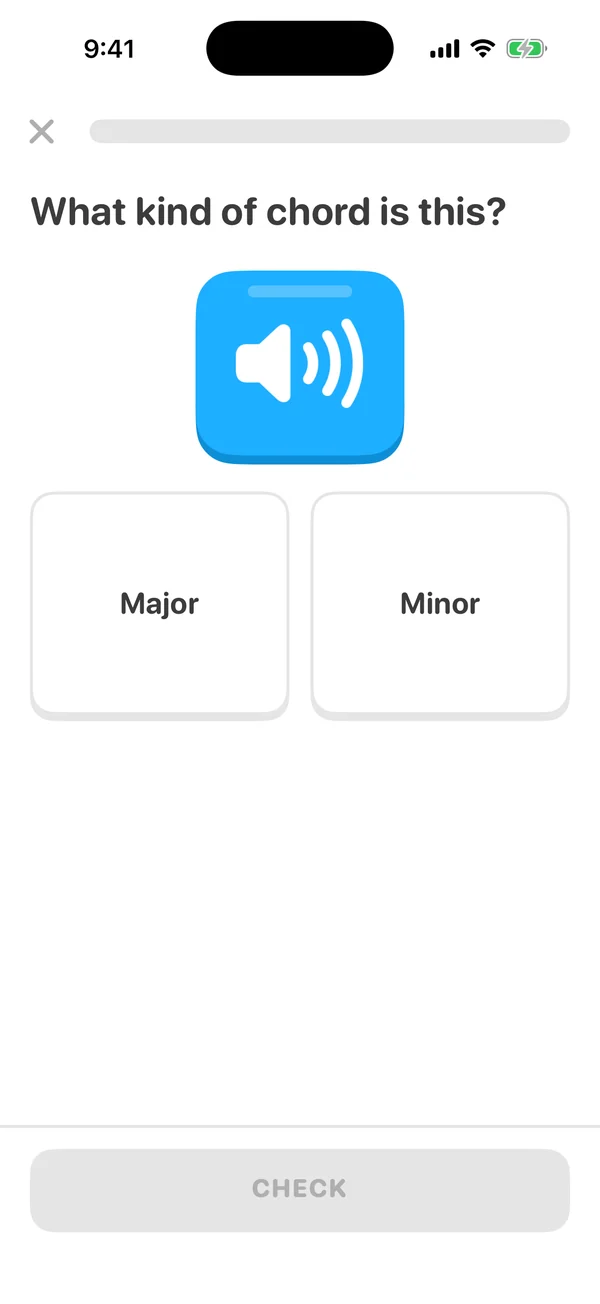
Chord Garden in Hearmony, the iPhone ear-training app the Hearmony team builds, opens with exactly this skill. Its first unit compares C major and C minor, starts with broken chords and moves to block chords as you improve, then adds diminished, augmented, sus2 and sus4. Seventh Heaven later adds seventh chords and inversions.
You can switch the sound between a sampled grand piano and a clean electric guitar in Settings, which helps you hear chord color across instruments.